On the Purpose of Renunciation

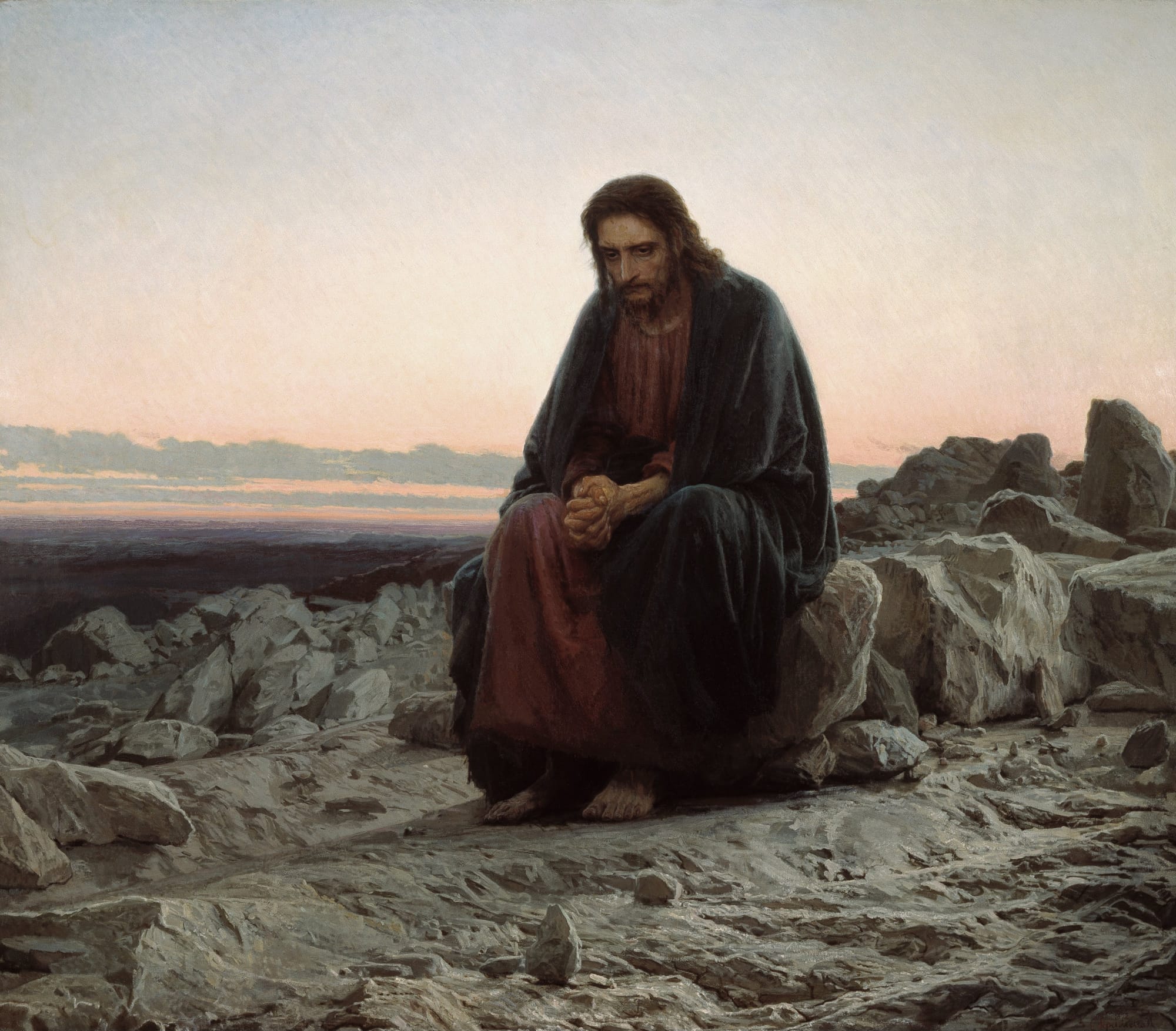
Most spiritual practitioners will, at some point in their journey, take on the cloak of asceticism to varying degrees; fasting, giving up alcohol or nicotine, sexual abstinence to name a few. I have done the same as part of my spiritual path, sometimes for many months at a time. I gave up use of intoxicants for several bouts of three months which led to my total sobriety in 2024 (still sober!). But the purpose for these renunciations is often left up to the interpretation of the practitioner, while sometimes they are fairly explicitly defined. In some systems they are spoken of as increasing sensitivity and energy and are a necessary part of the function of developing siddhis (magic powers!). In other systems they are a function of expurgation and cleansing of the soul so that the light of the Divine may eliminate anything that is not in union with the Divine.
I have often wondered why it seems necessary, at times, to consciously struggle and deprive oneself of the the comforts of routine. Coming from a fundamentalist Christian background I am no stranger to self-denial. The Jehovah's Witness denomination is where I picked up most of my self-abasement and default guilt about sexual gratification, so when I began on the spiritual path in earnest the drama around pornography and masturbation became a recurring theme. I had long left the guilt around displeasing an angry personal God behind—I do not think that any sort of prescribed morality that is sourced from a human view of sexuality can have any merit or sway over my spiritual progress. I generally think the same of substance use—now. When I first started meditating daily and practicing in ritual I would find that I automatically lingered on the question of personal sexual moral habits and their function in the magical process. My lack of results could easily be blamed on a lack of sexual cleanliness and a shadow of morality grew.
This is easily attributable to my earlier religious training. Masturbation was called "self abuse". As a young child and teenager this obviously had tremendous power and created default behavioral triggers and shadows. Those had not been dealt with directly, but indirectly through rebellion and logical explanation: I was no longer a fundamentalist Christian and no longer believed in an angry and jealous creator who nitpicked your every behavior looking for any excuse to damn you. Nonetheless, moral qualms about morality plagued my practice. The first of these was drug use, which I resolved through absolute and continued sobriety. I had a partial awakening during my withdrawal from kratom, and while indirect, I feel like this substantially contributed to the moral drama that continues to this day. If God does not require anything for awakening except devotion what does the use of substances or sexual satisfaction have to do with the process of spiritual realization? I believe the answer lies firmly in the conscious participation in the process of "looking just to see".
When we meditate with the object being devotion to the Divine—showing up to our practice with the only goal being a vessel for consciousness and simply looking to see what the case might be in that moment we are bringing our consciousness as it is into our practice. However refined or unrefined that consciousness is dictates what we may be capable of seeing. Within the limits of our human condition, what can we control? Well, we can (seemingly) make decisions. We cannot choose what our thoughts are, but we can move our attention and choose to engage with those thoughts. In our daily actions we may not be able to control our urges and impulses, but we can choose whether to act on them. Renunciation and taking on the mantle of asceticism in denial with sobriety, celibacy, obscurity, or fasting is a conscious decision to not believe the appearance of things and instead to follow something else and to make that other silent voice the center of our devotion. It is a choice to do something consciously and to make a decision for no other purpose than to do it.
It is not a transaction. Devotion has no apparent cause. You will not make something happen in your spiritual journey by being more devout or through purgation, or through self-denial. That's not how any of this works. The spiritual path may be one that includes self-denial, but it isn't through self-denial that you attain anything.
Attainment is always through the grace of the Divine. The King James translation of John 15:5 states "I am the vine, ye are the branches: He that abideth in me, and I in him, the same bringeth forth much fruit: for without me ye can do nothing.". If we are to realize our own divinity and receive the realization of union with the Divine, it is by His grace alone that it is realized. Period. So, why renunciation?
From a standpoint of spiritual practice the altar of practice is the experience of the practice. We bring what we take ourselves to be so that the Divine may operate through us and our experience, and in the process of that operation of grace we participate in consciously witnessing the miracle of creation, and through that we are changed. The world and creation is made more perfect, and the Divine memory is augmented with knowledge of itself. We are the vessel by which the Divine manifests. Conscious participation is the key to all of this, and the level of conscious participation we are capable of dictates the quality of the fruit of the practice. Renunciation is therefore a method for conscious participation in a way that changes the person we bring to the practice. I am not going to pretend to be an expert in how Divine energy works, or how the human, being the bridge between Heaven and Hell, operates as this vessel, but when you change the structure of the vessel different things are possible.
We do not create awakening. We do not create our thoughts. We do not manifest the world into being. This is purely in the hands of the creator and according to His Divine Will. However, we do get to participate, and when we come to the table of the altar of God with a mind preoccupied with sex, dulled by drugs, or laden with a heavy meal, the fruit of the tree may be bruised or rotten or withered and sour if it grows at all. We reap what we sow.
What this means, as a statement about morality, is that all human morality comes from a place that is inherently and purely Divine. We can soil that morality with our own ideas and philosophy, as the entire Western world has done time and time again. As soon as Christianity became a creed with doctrine dictated by the history of the morality of it's fore bearer, Judaism, it became something that was dictated by the moral philosophizing of the Rabbinical class. In Acts 15 the Apostles debate the necessity of circumcision for baptized believers in Christ, when Christ gave no such commandment. To my knowledge Christ gave no commandments except to love. The ensuing, seemingly loving, dictate from Jerusalem was a compromise to allow gentiles and Jews to continue their relationship with Christ within the Church while giving them only a few rules so as to allow for some familiarity while placing no undue burden. However creating rules above and beyond that which Christ placed on them, that is to love, was the permission to begin the enforcement of de jure Christianity versus de facto organic practice according to the conscience of the practitioner. The growth of the Church as a καθολικός (catholic, or "the one") institution instead of a personal reflection of ones relationship with the body of Christ (the Church) was the first but definite death blow.
Morality springs from the practice of ones faith and grows organically through the expression of the Divine Will through the human being. Morality does not come from the dictates of a human interpretation and philosophy and legal framework. The two may appear synonymous in writing—the same "rules" may apply, but how those "rules" appear radically define the participation of the individuals consciousness in the expression of the Divine Will in creation. If murder is "bad", why is it bad? Yes, we can write an essay on the needs of society and the social contract, but underneath it all there is the Divine Will and the human participation in creation as the vessel of that Will. Our morality springs forth from our participation of the Divine Will as the very expression of that Will in our every-day actions. We are the morality of the Divine, filtered through our shadows of who we take ourselves to be.
Back to our spiritual practice. I stated earlier that what we bring to our practice in the vessel that we are dictates the fruit that is possible. I have been told that the altar of our practice is a consecrated space where the particulars of our life and the shadows we indulge can play out where they can be uniquely observed. The space is consecrated for that very purpose. If we allow ourselves to look and see what comes up as distractions and impediments to the practical application of the steps of our practice we will be able to clearly see what needs to be seen. From a practical standpoint: If we are exhausted, we need to sleep; If our stomach growls, we need to eat; If our gluttony causes discomfort and distraction, we need to eat less; If our seeing is dulled by the habitual use of intoxicating drugs or drink, we need to show restraint; If frequent and distracting images of sexual activity or our own sexual drive inhibit our concentration, we need to show restraint. Temporary renunciation can allow for our own preferences to be laid bare and the things that may be inhibiting our seeing to be themselves seen.